Chianti Classico Explained: The Stories Behind Tuscany’s Most Iconic Wine
Not all Chianti is the same.
It’s one of the most common misconceptions in Italian wine—and one of the reasons many people misunderstand Tuscany altogether.
Because when people say “Chianti,” they are often referring to something broad.
But when you step into Chianti Classico, you quickly realize:
This is not just a wine.
It’s a territory shaped by centuries of rivalry, expansion, mistakes—and ultimately, refinement.
The Story Behind the Black Rooster
Before it became a symbol on a bottle, the Black Rooster (Gallo Nero) was part of a legend.
In the Middle Ages, Florence and Siena were in constant conflict over control of the Chianti territory. To settle the dispute, they agreed on a simple rule:
Two knights would ride toward each other at dawn—
and the border would be drawn where they met.
The signal to begin?
The crow of a rooster.
Siena chose a white rooster and fed it well.
Florence chose a black rooster—and kept it hungry and in the dark.
On the morning of the challenge, hungry, the black rooster crowed long before sunrise. The Florentine knight set off early, covering more ground before the Sienese rider even began.
The result:
Florence gained most of the Chianti territory.
And the black rooster became its enduring symbol—still found today on every bottle of Chianti Classico.
Chianti vs Chianti Classico
The distinction between Chianti and Chianti Classico is not just technical—it’s historical.
Chianti Classico is the original heartland, formally defined as early as 1716.
But as the wine gained popularity, something predictable happened:
More producers wanted in.
Over time, the boundaries of “Chianti” expanded well beyond the original zone. By the 20th century, large parts of Tuscany were producing wine under the Chianti name.
And with expansion came compromise.
When Success Became a Problem
By the mid-20th century, Chianti had become widely exported—and increasingly mass-produced.
To meet demand:
- yields increased
- white grapes were added to blends
- quality became inconsistent
At its worst, Chianti became associated with something very specific:
A simple red wine in a straw-covered bottle.
The fiasco.
Originally practical for transport, these straw-wrapped bottles became the global image of Chianti—but also a symbol of its decline into mass-market wine.
For many, Chianti stopped meaning terroir.
It became decoration on a restaurant table.
The Return to Identity
Chianti Classico emerged as a response.
A return to:
- stricter boundaries
- higher production standards
- a renewed focus on Sangiovese
The word Classico wasn’t added for marketing.
It was added to say:
👉 This is where it originally comes from.
The Grape: Sangiovese
Sangiovese is not an easy grape.
It’s naturally high in acidity, structured, and highly sensitive to where it’s grown.
It reflects:
- elevation
- soil composition
- exposure
Which is why, in Chianti Classico, it becomes something precise.
Not heavy. Not soft.
But balanced—
with tension between fruit, structure, and freshness.
What Chianti Classico Tastes Like
There is no single profile—but there is a recognizable thread.
- red and sour cherry
- dried herbs
- earth
- a distinct freshness
The wine doesn’t overwhelm.
It holds.
This is why it works so naturally with food—because it was never designed to stand alone.
What Most People Get Wrong
Most visitors encounter Chianti Classico the same way:
A tasting.
A few explanations.
A scenic view.
And then they move on.
But without context, the wine remains disconnected.
You don’t see:
- the land it comes from
- the decisions behind it
- the role it plays in daily life
And without that, Chianti Classico becomes just another label.
Where It Starts to Make Sense
The shift happens outside the tasting room.
Walking the land with someone who knows it.
Standing in an olive grove before sitting down to eat.
Seeing how wine fits into something broader—not as the center, but as part of a way of living.
At that point, the wine changes.
Not in the glass.
In how you understand it.
Final Thought
Chianti Classico is not just a wine.
It’s the result of centuries of:
- rivalry
- expansion
- decline
- and renewal
From a hungry black rooster that redrew a border…
to a straw-covered bottle that nearly diluted its identity…
…to a region that chose to define itself again.
And once you understand that,
you don’t just taste Chianti Classico.
You recognize everything that shaped it.



More Posts
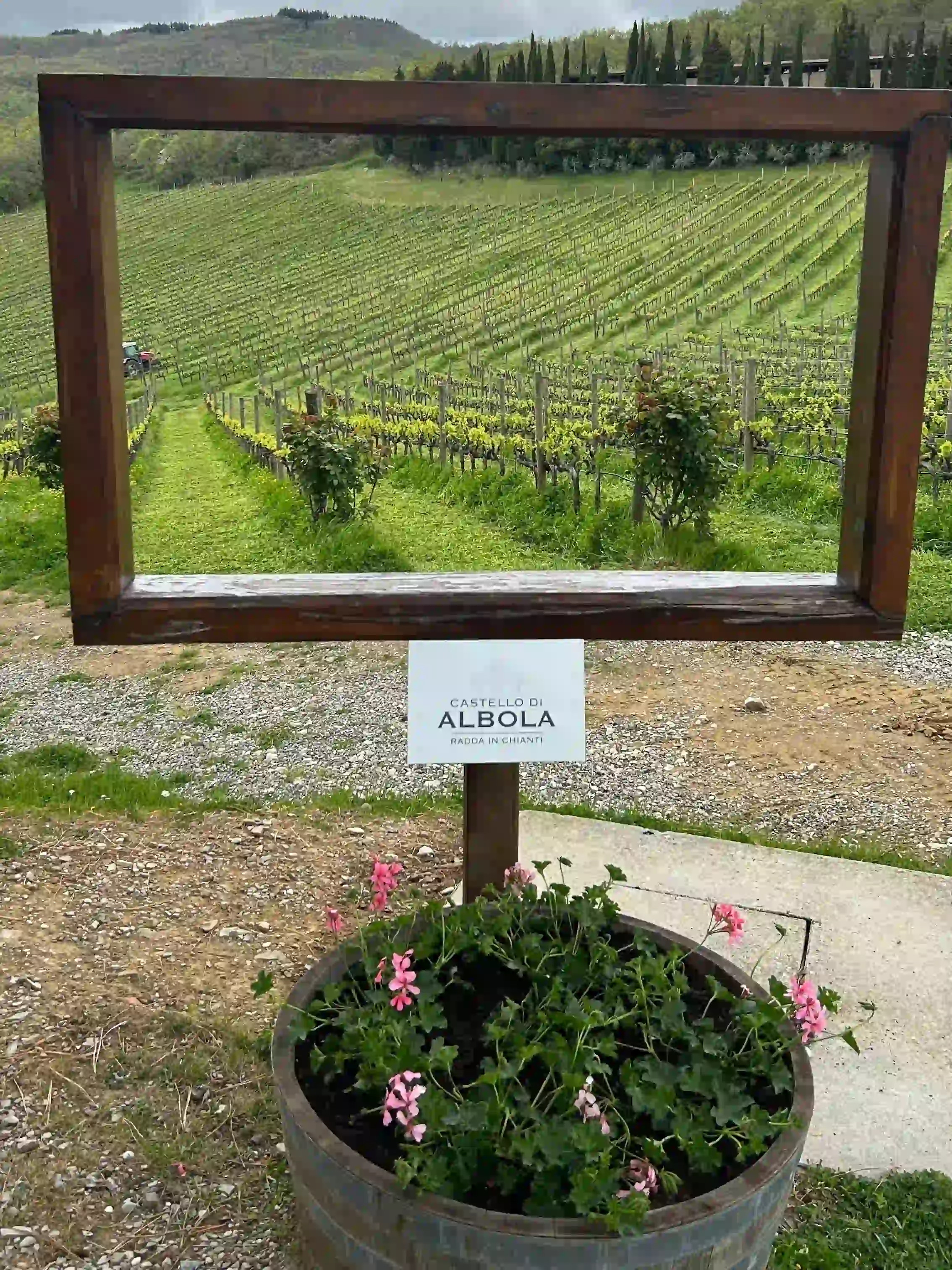
What Is a Tuscan Villa Experience? (And Why It Changes Everything)
A Tuscan villa is more than a place to stay—it’s a way of living. Discover how it transforms your experience of Tuscany.
Your Food Journey
Starts Here.
Join a small group and take your seat at our table.
Explore Europe through generous tables and vineyards while staying in exclusive villas rooted in place. Travel differently. Eat locally. Connect deeply.